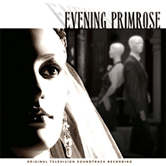
Just uploaded is a
CD review of Evening Primrose, Stephen Sondheim’s score for a rarely-seen musical horror/drama that aired in 1966 as part of
ABC’s Studio 67 series. To add some context to the music, we’
ve also got an
interview with Bruce Kimmel, whose
Kritzerland label released the album (limited to 3000 copies).
Based on John Collier’s 1951 short story about a poet who hides in a large department store to write, the 50 min. musical was shot on colour videotape, although what’s available to view (namely at New York City’s
Museum of Television & Radio) is a black & white
kinescope (essentially a 16mm copy filmed off a monitor). That's what fans of live TV from the fifties expect, but not of a 1966 TV series from a period from which many programs are still shown in syndication, or are occasionally released on DVD.
1966
isn’t all that long ago. One would think the ephemeral nature of shows – particularly those with prestige and cultural value - was less severe at that time, but even the makers of Gilligan’s Island never realized the potential income that could be earned when a show went into syndication and impressed an endless stream of young TV watchers (and future DVD buyers).
Studio 67 had too few episodes for a syndication package, although had the network show died today, it could’
ve been repeated on secondary
venus like Bravo or Showcase, or any of the specialty cable channels that have, to some extent, exploited and rescued material previously growing dust in distributor vaults.
Examples include Bravo airing old episodes of CBC Telescope (featuring interviews with Alfred Hitchcock, Peter Sellers, and covering the premiere of It's a Mad, Mad, Mad, Mad World) and the PBS series Golden Age of Television (featuring rare
kinescopes of teleplays like Marty, The Days of Wine and Roses, Patterns, and Requiem for a Heavyweight - episodes we'll actually review in due time).
The most obvious stance is that there ought to be some preservation for the junk, the culturally noble, and the mainstream hits; that’s a given. It’s appalling that material broadcast 40 years ago has disappeared, but what about the glut of present-day shows?
Network failures like Surface, Invasion, Earth 2, and
CBC's MVP: Secret Lives of Hockey Wives are now on DVD, and people who taped material off TV decades ago have also made their personal collections available through DVD-Rs, file-sharing, and
YouTube. You can find the Star Wars Holiday Special out there, or more infamously, pilots for Bionic Woman and The Sarah Connor Chronicles prior to the
reshoots and recasting that upgraded the eventually broadcast pilots.
Thirty to forty years ago, there was just the TV airwaves to catch repeats of shows, and perhaps educational and rare distribution venues for winnowed TV product using formats like ¾” U-
Matic, 16mm and perhaps 8mm film, and nothing else.
What we have to draw from today are what came out commercially on now-obsolete home video formats (VHS, Beta), material taped by consumers or the few in possession of industrial videotape recorders (U-
Matic),
internet venues, and current home video formats.
We basically have an excess of product: what’s popular for the moment; what studio and network labels deem of note; what’s rare and sought-after by rabid fans or amateur archivists; and ‘classic’ shows that will be of less interest as fans age, die off, and traces of those shows disappear from the most popular venues (if not pop culture at large).
Grim? Maybe, and maybe not.
Undoubtedly a percentage of what’s neat and popular now will be regarded as indulgent 20 years from now, and maybe 40 years later people will groan and wonder why something like reality TV (the biggest oxymoron around) was the rage, and maybe its untold hours of vapid programming will simply disappear in vaults, save for best-of anthologies documenting the trend.
The question are plenty:
Will those hours of junk, the culturally noble, and the mainstream hits will be available for the few remaining keen fans, or for archival purposes for historians and researchers?
Will they be relegated to museums because of complex music and film rights?
Wll there eventually be a ‘fair use’ allowance for online usage, whether through subscription or mere registration?
Can one download a low-res copy for research, or will one have to visit foreign cities to see and hear a now-rare production?
Evening Primrose is somewhat available online, and one easy venue is (unsurprisingly)
YouTube, consisting of an
extract of the exquisite duet, “Take Me to the World.”
That still means the full episode is still locked up, and as with many other rarities, DVD and CD producers are well familiar of several common reasons why something idling on a shelf or in a vault
isn’t being exploited in any way: the rights holder is tough to find, the right holder is greedy, the rights are held by several parties with their own interpretations of legal ownership, or perhaps there’s some sense of embarrassment on the part of the creator or rights holder that’s preventing a show from going anywhere beyond a cardboard box.
If it’s an emotional issue for the rights holder, that’s something that can occasionally be solved through a producer’s patience and gentle persistence. If it’s greed, it’s just perplexing to think the owner would prefer to earn nothing off a property and allow the passage of time to render it culturally inert.
If no one knows it exists, is it really being missed, and of significance anymore?
And if it’s released long after a generation’s interest has subsided, will the market interest be so reduced that a commercial release just
isn’t worth the legal and manufacturing costs for the owner?
Evening Primrose is symptomatic of what happens when popular art disappears, and/or is entangled in rights issues its creators never envisioned. Besides visiting a museum, one can also wait until the copyright has run out, and then maybe a particular production can emerge on home video (provided DVD still exists, what, 30 to 40 years from now?), but are these options reasonable when the patrons of a production or series lose interest?
I've no idea what the solution is, but there has to be a way with which fans can enjoy art (plus populist crap), and scholars, journalists, and researchers have greater resources at hand through some fair use system.
If a program is reduced to a low-res video file, it's neither broadcast quality nor has any commercial value. It's literally of archival or reference value, and little else. This isn't a railing against the flawed copyright amendments proposed by the current Conservative regime (read
HERE for some clear analysis), nor a poke at the extension some counties have made to the expiration of copyright after the previously standard 50 years.
This is straight concern that if rights holders maintain apathy towards art they own, or demand unreasonable fees for something they know is esoteric, or figure sitting on something long enough might increase demand, they're delusional. Even marginalized art is still art, but when it moves from popular to niche market, you, the rights holder, have blown your chance for enriching a nation's culture.
Think about it.
Next : soundtrack reviews.
And imminent: two films by Saul Bass – Phase IV (1974) from Legend Films, and Why Man Creates (1968) from Pyramid Media.
-
MRHVisit
KQEK.com’s Main Page
HERE!
Technorati Tags:
DVD Reviews