0

A Few More Soundtracks (Dark, and Light)

Just uploaded are a trio of new releases from the major studios:

- The Dark Knight (Warner Sunset/Warner Bros.), proving the collaboration between Hans Zimmer and James Newton Howard in Batman Begins wasn't a fluke.

- Swing Vote (Hollywood), featuring a quartet of John Debney cues in this songs-and-score downloadable album.

- Meet Dave (Varese Sarabande), offering a surprisingly light and amusing comedy/adventure score from John Debney.

Coming next: early Michael Powell from MPI!

And imminent: Paul Jones on film – The Committee (from MVD Visual) and Peter Watkins’ Privilege (from Project X / New Yorker Films), and a few more soundtracks.


- MRH

Visit KQEK.com’s Main Page HERE!
Technorati Tags: DVD Reviews
0

Zak Penn’s Double-Mockery

Anchor Bay/Starz’ release of The Grand marks Zak Penn’s second directorial effort, wherein the filmmaker shifts into Christopher Guest terrain and has a large cast improvising characters and scenes in a fairly straightforward narrative about six finalists in a wealthy Las Vegas poker tournament.

Does it work? That depends on one’s love of poker, improv comedy, and interest in very idiosyncratic characters. The toughest test for any filmmaker exploiting a very specific sport or activity or discipline is whether non-fans can get into the drama; pleasing all fans is an impossible goal, but crafting a film that anyone who knows zilch about poker can enjoy is the big question.

The same could also be said of Incident at Loch Ness (Twentieth Century-Fox), Penn’s satire of Hollywood egos (and his directorial debut). If you know zilch about filmmaking, will a mockumentary about capturing a quest to catch Nessie the Loch Ness monster on film entice?

Both films are steeped with nuances and very annoying characters whose quirks have the potential to turn off viewers, or grab them because of the mounting idiocies, although in the case of The Grand, it all ends well for every one simply because of good sportsmanship and the support network each character maintains.

They’re also grounded in some way, which is a marked contrast to the characters in Loch Ness who pretty much experience the opposite journey: instead of combatants walking away with a sense of self pride and accomplishment, it’s the supportive family atmosphere that brings together similarly disparate, passionate souls, but is totally lost by the final reel, leaving director Werner Herzog dismayed, and befuddled (although hardly broken in spirit).

Penn’s collaboration with Herzog on Loch Ness paid off extremely well, but it’s also a movie about a fake movie within a fake movie, and few straight dramas about moviemaking work because they’re often saccharine and forced to rely on painful melodrama. I know some are citing Francois Truffaut’s Day for Night as the high point, but it’s manipulative and very reverent towards the bonding and mini-dramas on a film set.

Perhaps that’s why satires can dig so deep and feel more real: sometimes the passion is too grandiose; instead of actors doing the honorable thing and sacrificing everything for the Film, it’s more about honoring the contract so a nightmare production is over and done with.

In The Grand, it’s about what the actors brought to their characters than any insight about poker, whereas Incident at Loch Ness contains a lot of subtext about the filmmaking process, and how, when in the hands of commercial makers, the documentary genre is more about entertaining than informing – particularly when it involves some snouted monster called Nessie.

Coming next: more soundtracks, reviews of more early Michael Powell from MPI.

And imminent: Paul Jones on film – The Committee (MVD Visual) and Peter Watkins’ Privilege (Project X / New Yorker Films) - and the paparazzi under the microscope in Diana: The Witness in the Tunnel (Anchor Bay/Starz).


- MRH

Visit KQEK.com’s Main Page HERE!
Technorati Tags: DVD Reviews
1

Saul Bass on DVD

If you didn’t see Saul Bass’ Phase IV (his lone feature-length film) when it was released by Paramount in 1974, you probably caught the film on TV, and remember one very stark and very weird image: some guy in some weird underground bunker watching a hand rise out from sand, and lots and lots of ants. The ants actually preceded that shot, but the two are firmly tied together in the minds of affected (and now grown-up) kids, and they're the main images kids (like me) recall from a strangely hypnotic film that pretty much disappeared from home video after a short VHS release.

Like The Possession of Joel Delaney, Mandingo (and the upcoming Hurricane), Phase IV is finally available on DVD via Legend Films, and in addition to a review of this DVD, we’ve added reviews of Bass’ other films that place this iconic title and graphic designer/director Bass in context: Bass on Film (1977), where the designer talks shop with clips from some of his most famous main title designs; and Why Man Creates (1968), for which he won as Oscar.

If the name Saul Bass draws a great big blank, please check out the Wikipedia entry, as well as the British Design Museum entry for samples of logos and film clips you’ll certainly recognize.

Coming next: reviews of Zak Penn’s The Grand (2007) and Incident at Loch Ness, and more soundtrack reviews.

And imminent: Paul Jones on film – The Committee (from MVD Visual) and Peter Watkins’ Privilege (from Project X / New Yorker Video) - as well as rare Michael Powell, courtesy of MPI.


- MRH

Visit KQEK.com’s Main Page HERE! Technorati Tags: DVD Reviews


0

Andrew Lockington's 3-D Journey

This has been a bit of a busy week, so rather than have one big Editor’s Blog, I’ve chosen to break things up according to subjects, and keep editorial blatherings tied to specific subjects. (Which I think makes sense, right?)

First up is an interview with Andrew Lockington, with whom I last corresponded around 2001 soon after speaking to the people behind the stellar Robert Evans documentary, The Kid Stays in the Picture. The original article appeared in Music from the Movies (which you can read via scans for Pages ONE, TWO, and THREE), and threaded together separate interviews with co-directors Brett Morgen and Nanette Burstein, as well as composer Jeff Danna.

Around that time I emailed Lockington regarding the song “What’ll I Do?” the gorgeous Irving Berlin tune sung by William Atherton for The Great Gatsby (which Evans produced in 1974), as orchestrated by the late, great Nelson Riddle. (If you’re not familiar with his work, he was an exceptionally refined composer/arranger/orchestrator who had superb taste in shaping songs to suite not only the strengths of singers like Frank Sinatra, but rework them in ways the original composers never figured would work.)

In any event, at that time my record collection was quite big, and I had a copy of the original 2-LP soundtrack set release by Paramount on their standard crappy vinyl (often filled with bubbles and bits of paper from garbaggio/reconstituted vinyl). I emailed Lockington – then orchestrating Danna’s score - so he could match the orchestration, because the directors had cut scenes to fit that version, and Danna’s gorgeous music made use of the song at key points because it really is the unofficial Robert Evans Life Theme. (If you’ve seen the film – which I urge if you haven’t – you know how it fits the narrative.)

Fast forward 7 years, and Lockington has landed the plum position as composer of New Line’s Journey to the Center of the Earth 3D. Rather than bathe the film in bombast, he composed a startling, retro-eighties orchestral score that’s one of my most cherished scores of the year. In addition to the album review (available as a downloadable MP3 album from New Line Records in North America, and as a CD and MP3 album from Silva Screen in Europe), we’ve also got an interview with Lockington, covering his background, scoring 3D, and his latest projects.

I have a great deal of fondness for 3-D (not the eyeball pain from Polaroid glasses, but nostalgia for the format), and we’ll have some upcoming reviews of rare and lesser-known 3-D films on DVD, VHS, and a few oddball formats. (I wish David Buttolph’s great score – in stereo! – for House of Wax (1953) would get a CD release, but that’s a gripe for a future blog.)

Also added is a CD review of Trevor Rabin’s Get Smart score. Rabin’s best known for his rather bombastic action scores (Bad Boys, Armageddon) but Varese Sarabande’s new CD reveals Rabin does indeed have a sense of humour, and knows how to have fun with a very simple (and repetitive) TV theme.

Coming next: reviews of Saul Bass’ Phase IV (1974), Why Man Creates (1968), and Bass on Titles (1977).

And imminent: reviews of Zak Penn’s The Grand (2007) and Incident at Loch Ness.


- MRH

Visit KQEK.com’s Main Page HERE! Technorati Tags: DVD Reviews
0

Forgotten TV

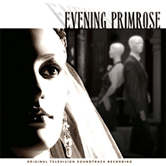
Save me from oblivion!Just uploaded is a CD review of Evening Primrose, Stephen Sondheim’s score for a rarely-seen musical horror/drama that aired in 1966 as part of ABC’s Studio 67 series. To add some context to the music, we’ve also got an interview with Bruce Kimmel, whose Kritzerland label released the album (limited to 3000 copies).

Based on John Collier’s 1951 short story about a poet who hides in a large department store to write, the 50 min. musical was shot on colour videotape, although what’s available to view (namely at New York City’s Museum of Television & Radio) is a black & white kinescope (essentially a 16mm copy filmed off a monitor). That's what fans of live TV from the fifties expect, but not of a 1966 TV series from a period from which many programs are still shown in syndication, or are occasionally released on DVD.

1966 isn’t all that long ago. One would think the ephemeral nature of shows – particularly those with prestige and cultural value - was less severe at that time, but even the makers of Gilligan’s Island never realized the potential income that could be earned when a show went into syndication and impressed an endless stream of young TV watchers (and future DVD buyers).

Studio 67 had too few episodes for a syndication package, although had the network show died today, it could’ve been repeated on secondary venus like Bravo or Showcase, or any of the specialty cable channels that have, to some extent, exploited and rescued material previously growing dust in distributor vaults.

Examples include Bravo airing old episodes of CBC Telescope (featuring interviews with Alfred Hitchcock, Peter Sellers, and covering the premiere of It's a Mad, Mad, Mad, Mad World) and the PBS series Golden Age of Television (featuring rare kinescopes of teleplays like Marty, The Days of Wine and Roses, Patterns, and Requiem for a Heavyweight - episodes we'll actually review in due time).

The most obvious stance is that there ought to be some preservation for the junk, the culturally noble, and the mainstream hits; that’s a given. It’s appalling that material broadcast 40 years ago has disappeared, but what about the glut of present-day shows?

Network failures like Surface, Invasion, Earth 2, and CBC's MVP: Secret Lives of Hockey Wives are now on DVD, and people who taped material off TV decades ago have also made their personal collections available through DVD-Rs, file-sharing, and YouTube. You can find the Star Wars Holiday Special out there, or more infamously, pilots for Bionic Woman and The Sarah Connor Chronicles prior to the reshoots and recasting that upgraded the eventually broadcast pilots.

Thirty to forty years ago, there was just the TV airwaves to catch repeats of shows, and perhaps educational and rare distribution venues for winnowed TV product using formats like ¾” U-Matic, 16mm and perhaps 8mm film, and nothing else.

What we have to draw from today are what came out commercially on now-obsolete home video formats (VHS, Beta), material taped by consumers or the few in possession of industrial videotape recorders (U-Matic), internet venues, and current home video formats.

We basically have an excess of product: what’s popular for the moment; what studio and network labels deem of note; what’s rare and sought-after by rabid fans or amateur archivists; and ‘classic’ shows that will be of less interest as fans age, die off, and traces of those shows disappear from the most popular venues (if not pop culture at large).

Grim? Maybe, and maybe not.

Undoubtedly a percentage of what’s neat and popular now will be regarded as indulgent 20 years from now, and maybe 40 years later people will groan and wonder why something like reality TV (the biggest oxymoron around) was the rage, and maybe its untold hours of vapid programming will simply disappear in vaults, save for best-of anthologies documenting the trend.

The question are plenty:

Will those hours of junk, the culturally noble, and the mainstream hits will be available for the few remaining keen fans, or for archival purposes for historians and researchers?

Will they be relegated to museums because of complex music and film rights?

Wll there eventually be a ‘fair use’ allowance for online usage, whether through subscription or mere registration?

Can one download a low-res copy for research, or will one have to visit foreign cities to see and hear a now-rare production?

Evening Primrose is somewhat available online, and one easy venue is (unsurprisingly) YouTube, consisting of an extract of the exquisite duet, “Take Me to the World.”

That still means the full episode is still locked up, and as with many other rarities, DVD and CD producers are well familiar of several common reasons why something idling on a shelf or in a vault isn’t being exploited in any way: the rights holder is tough to find, the right holder is greedy, the rights are held by several parties with their own interpretations of legal ownership, or perhaps there’s some sense of embarrassment on the part of the creator or rights holder that’s preventing a show from going anywhere beyond a cardboard box.

If it’s an emotional issue for the rights holder, that’s something that can occasionally be solved through a producer’s patience and gentle persistence. If it’s greed, it’s just perplexing to think the owner would prefer to earn nothing off a property and allow the passage of time to render it culturally inert.

If no one knows it exists, is it really being missed, and of significance anymore?

And if it’s released long after a generation’s interest has subsided, will the market interest be so reduced that a commercial release just isn’t worth the legal and manufacturing costs for the owner?

Evening Primrose is symptomatic of what happens when popular art disappears, and/or is entangled in rights issues its creators never envisioned. Besides visiting a museum, one can also wait until the copyright has run out, and then maybe a particular production can emerge on home video (provided DVD still exists, what, 30 to 40 years from now?), but are these options reasonable when the patrons of a production or series lose interest?

I've no idea what the solution is, but there has to be a way with which fans can enjoy art (plus populist crap), and scholars, journalists, and researchers have greater resources at hand through some fair use system.

If a program is reduced to a low-res video file, it's neither broadcast quality nor has any commercial value. It's literally of archival or reference value, and little else. This isn't a railing against the flawed copyright amendments proposed by the current Conservative regime (read HERE for some clear analysis), nor a poke at the extension some counties have made to the expiration of copyright after the previously standard 50 years.

This is straight concern that if rights holders maintain apathy towards art they own, or demand unreasonable fees for something they know is esoteric, or figure sitting on something long enough might increase demand, they're delusional. Even marginalized art is still art, but when it moves from popular to niche market, you, the rights holder, have blown your chance for enriching a nation's culture.

Think about it.

Next : soundtrack reviews.

And imminent: two films by Saul Bass – Phase IV (1974) from Legend Films, and Why Man Creates (1968) from Pyramid Media.

- MRH


Visit KQEK.com’s Main Page HERE!
Technorati Tags: DVD Reviews
 
Copyright © mondomark